
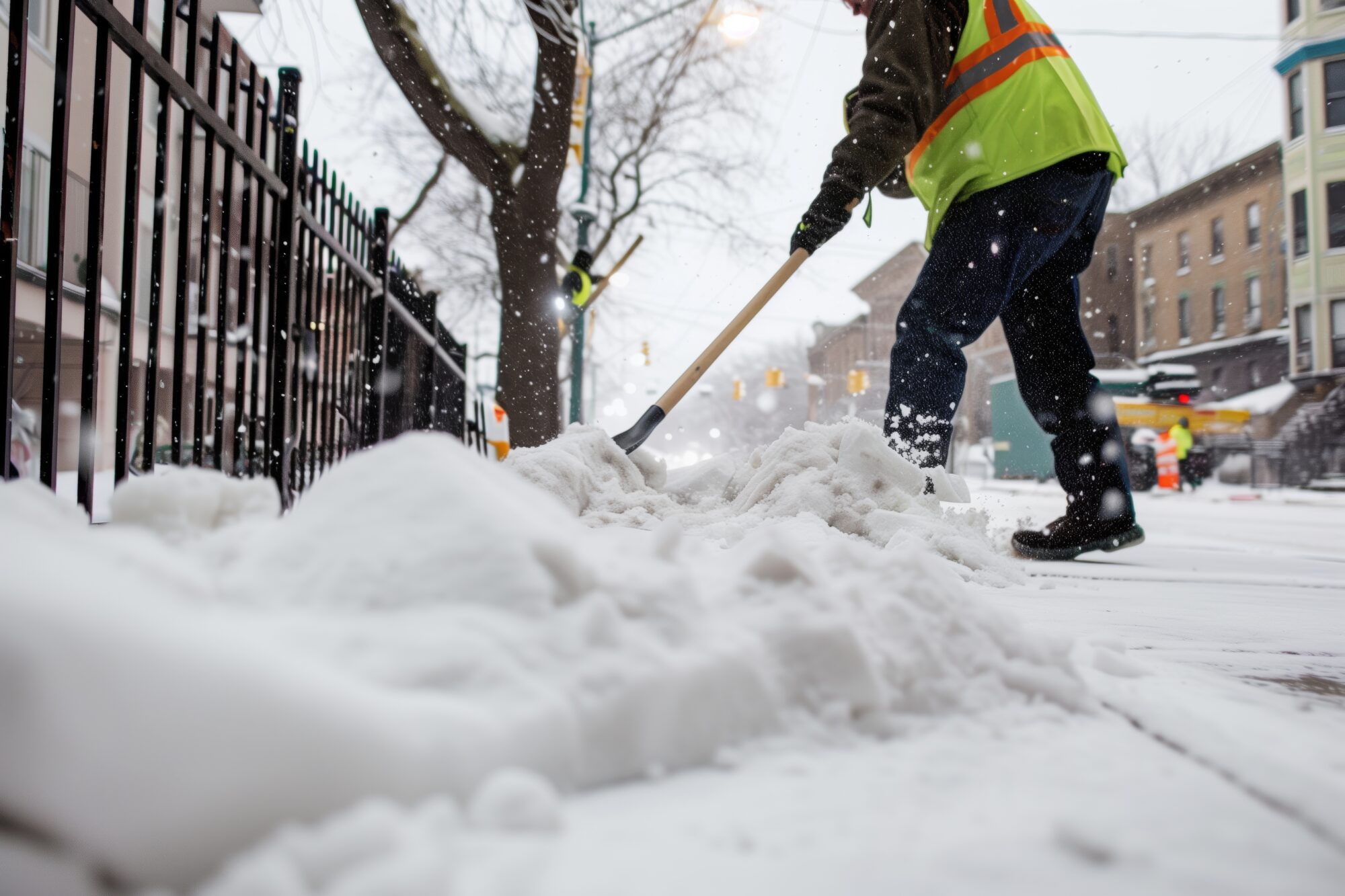
The time frame for snow removal is usually dependent on state laws or municipal ordinances. Landlords and property owners are typically required to remove snow within 24 hours of the end of a snowfall. For example, New York City requires any person in charge of a lot or building to clean snow and/or ice from the sidewalk within 4 hours after the snow stops falling, or by 11 a.m. if the snow stops falling after 9 p.m. the previous evening.
Snow removal is primarily the property owner’s or landlord’s responsibility, but in some cases, the tenant may be responsible for some aspects. However, the responsibility can also be transferred from a landlord to a tenant within the lease agreement. Depending on the state or municipal laws, tenants may be in charge of clearing their own sidewalks, doorways, steps, or ramps, so it is always a good idea to let tenants know the limits of your snow removal responsibilities.
For example, it is not typically the property owner’s job to dig out cars in a parking lot or to re-plow a parking spot after a vehicle has been moved. Another example is letting residents know that snow plowing will be done within the legal timeframe after snowfall, and that you are not obligated to make special arrangements for tenants who need to leave earlier.
The town may own curbs and sidewalks, but many villages will place the responsibility for snow removal on the property owner. Failure to comply with local regulations regarding snow and ice removal could result in a fine for the property owner, even if sidewalk management is spelled out in the lease agreement as the tenant’s responsibility. These responsibilities should be clearly outlined in a lease or contract to address concerns over snow removal expectations. Make sure to check with your local government office for snow removal codes.
To avoid fines, lawsuits, or bodily injury claims, property owners are expected to maintain the property and take any necessary steps to keep the area safe. This can include clearing snow, using salt or sand on sidewalks, or placing cones on slippery floors. These precautions are essential to prevent foreseeable situations that could result in injury.
In terms of bodily injury, accidents due to snowy sidewalks are a serious liability. If someone falls on the snow or ice after the four-hour time limit has expired and is seriously injured, then the responsible party could be liable for some hefty damages. In addition to being fined, they could be sued by the injured party. The injured person may bring a claim against both the owner and the management company for damages.
When in doubt, property owners and tenants named as responsible in lease agreements should clear sidewalks of snow and ice without delay, if at all possible. Reach out to us with questions anytime, and download our free Winter Survival Kit for Board Members and Property Managers for more.
