
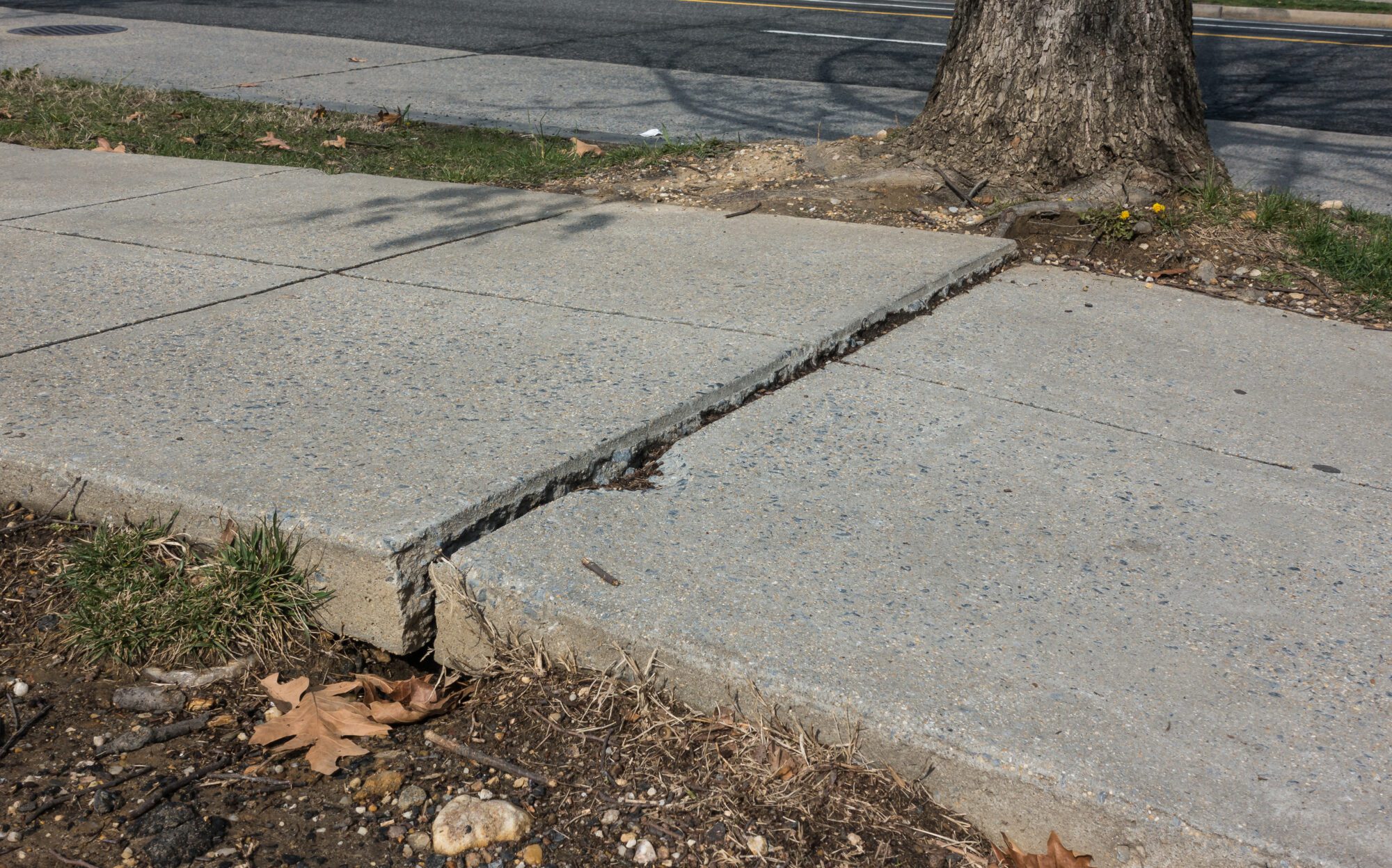
Trip-and-fall claims are often dismissed as “small” general liability exposures — until they aren’t. A recent sidewalk loss in the Bronx, NY, serves as a textbook example of how seemingly ordinary premises claims can escalate rapidly and why today’s liability environment demands serious attention from property owners, boards, and managers.
The Incident: A Sidewalk Defect with Serious Consequences
The claim arose from a trip-and-fall incident on a public sidewalk adjacent to a residential building in the Bronx. Photographs taken shortly after the loss showed a significant sidewalk defect, not a minor crack or cosmetic issue. The size and nature of the condition made it difficult to credibly argue that it was trivial or unavoidable.
Under New York law, and particularly in New York City, property owners are generally responsible for maintaining sidewalks abutting their premises. When a defect is substantial and visible, it becomes far easier for a plaintiff to establish negligence.
The Injuries: More Than “Soft Tissue”
What initially appeared to be a routine bodily injury claim quickly evolved into a high-severity loss. The claimant sustained:
- A torn meniscus, requiring arthroscopic surgery
- Cervical and lumbar disc bulges
- Epidural and steroid injections as part of ongoing treatment
These are not injuries that juries view lightly, especially when supported by diagnostic imaging, surgical intervention, and pain management procedures. In personal injury litigation, treatment type matters as surgery and injections often signal permanence, pain, and long-term impact.
Why the Claim Was Covered
From a coverage standpoint, this loss fell squarely within the insured’s general liability policy. The incident involved:
- A third-party bodily injury
- Occurring at an insured location
- Allegedly caused by a premises condition that the insured had a duty to maintain
There were no coverage exclusions that removed the carrier’s obligation to defend or indemnify. As a result, the insurer provided a defense and ultimately funded a substantial settlement.
The Speed of Escalation
One of the most striking aspects of this claim was how quickly it developed. Early in the lifecycle, the file carried a very modest reserve, reflecting the common assumption that sidewalk trip-and-falls are manageable exposures. However, once depositions were taken and the full scope of the injuries became clear, the valuation shifted dramatically.
The claim ultimately settled for $390,000, and over $30,000 in defense costs. For a single-plaintiff sidewalk loss, that is a meaningful outcome — and one that could have been significantly worse.
Trial Risk: Why the Exposure Was Far Higher
Had this case gone to trial, the insured’s exposure would have increased substantially. Several factors would have worked against the defense:
- A clearly visible sidewalk defect
- Documented medical treatment, including surgery and injections
- A Bronx venue, where jury awards tend to be higher
- The absence of strong comparative negligence defenses
In a trial setting, plaintiff counsel would likely have emphasized not just the injury, but the failure to correct a known and preventable condition. When juries are asked to assign value to pain, suffering, and future impact, verdicts can easily exceed settlement numbers, sometimes by multiples.
How This Claim Illustrates Social Inflation
This loss is a clear example of social inflation, a term used in the insurance industry to describe the trend of increasing claim costs beyond what would be expected from economic inflation alone.
Social inflation is driven by several factors, including:
- Greater willingness of juries to award large damages
- Increasing medical costs and more aggressive treatment pathways
- Litigation funding and more sophisticated plaintiff strategies
- A societal shift toward holding property owners and businesses financially accountable
In this case, a sidewalk condition that might once have resulted in a modest settlement instead produced a six-figure outcome, not because coverage was unusual, but because the liability and damages environment has changed.
The Takeaway for Property Owners and Managers
This claim underscores several important lessons:
- Sidewalk maintenance is not optional, especially in New York City
- Small defects can lead to large losses when injuries are serious
- Early claim assumptions can be dangerously misleading
- Social inflation makes defending even “routine” claims increasingly expensive
Proactive inspection, timely repairs, and strong risk management protocols are no longer just best practices; they are essential defenses against a liability landscape that continues to trend upward.
In today’s environment, the question is no longer whether a sidewalk claim can become severe, but how quickly it can happen.
